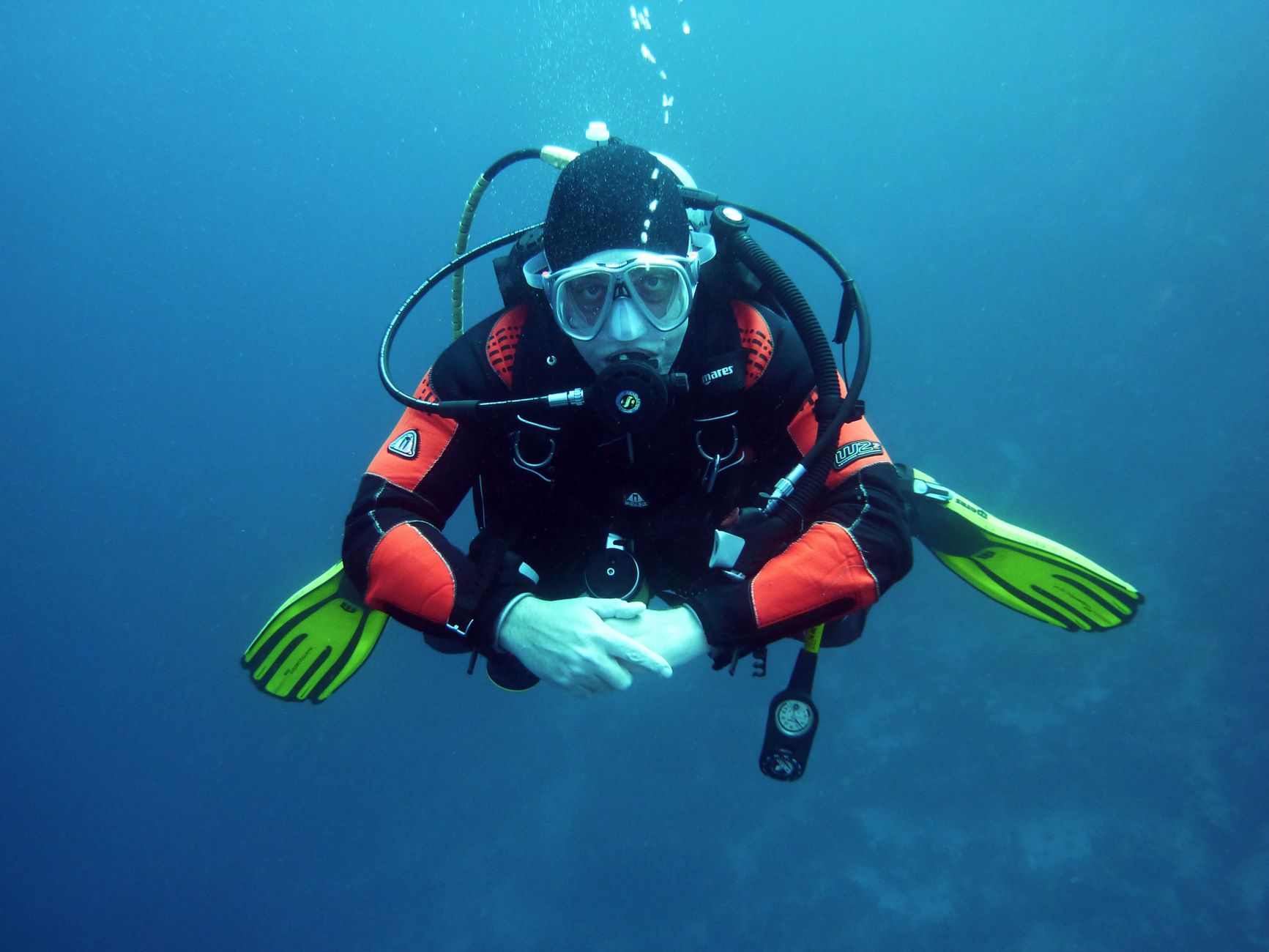
Buddy Diving Safety Protocols Every Diver Should Practice
Introduction
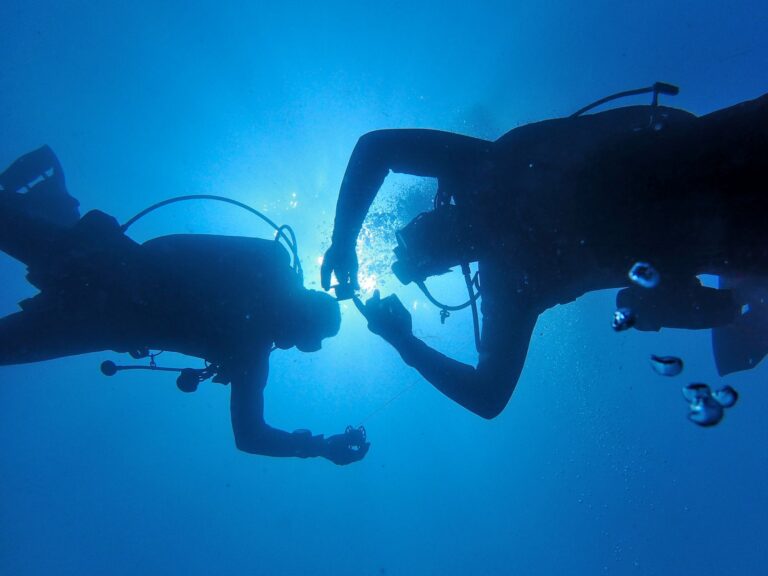
Buddy diving is the backbone of recreational scuba. The theory is straightforward: two divers look out for each other, share air in an emergency, and make better decisions together. In practice, it’s often messier. Divers get distracted, skip pre-dive checks, or assume their buddy is more experienced than they actually are. This article is for divers who want to move past basic certification and build real buddy diving safety protocols that work under real conditions. I’m writing from a dive medical perspective, but everything here comes from practical, in-water experience. These protocols aren’t theoretical. They reduce risk when conditions change, gear fails, or judgment slips.
[IMAGE_1]
Why Buddy Diving Safety Protocols Are Non-Negotiable
The medical literature and incident reports from organizations like DAN consistently show that a trained buddy reduces the severity of dive accidents. In out-of-air emergencies, having a buddy who can provide a working alternate air source within seconds is the difference between a controlled ascent and a panic ascent that leads to arterial gas embolism. Buddy protocols are not just about following rules. They are about creating reliable, repeatable actions that override panic. When your brain stops working clearly underwater, your training and your buddy’s training take over. That only works if both of you have practiced and agreed on the same protocols beforehand. Every time I’ve seen a near-miss turn into a serious incident, the root cause traces back to a simple protocol failure: no pre-dive check, a missed signal, or a buddy who swam off without waiting. These are preventable. The protocols exist because the ocean does not care about your comfort level.
The Pre-Dive Safety Check: More Than Just a Ritual
The BWRAF check â BCD, Weights, Releases, Air, Final OK â is taught in every open water course. And every instructor has a story about a student who did it wrong or skipped it entirely. The pre-dive check is not a ceremony. It is the last chance to catch a problem before you are underwater and breathing compressed gas. What divers frequently miss: checking that the cylinder valve is fully open. A partially open valve can cause an unexpected restriction at depth. Another common miss: not verifying that your alternate air source is positioned within the triangle of your chest and mouth, where both you and your buddy can reach it easily. If your octopus is dangling below your waist, it is useless in an emergency. Do the check in the same order every time. Use a slate if it helps. Practice doing a streamlined version while negatively buoyant if conditions demand it. A reliable pre-dive checklist slate keeps you honest, especially when you are distracted by boat traffic or current.
- BWRAF in order: BCD inflate/deflate, weight release, all tank straps, cylinder valve open, regulator breathe, then final OK with your buddy.
- Buddy check: Look at their alternate air source position. Confirm you both know how to deploy it.
- Practice underwater: After the formal check, do a quick pre-dive simulation if conditions allow. It builds muscle memory.
If you want a tool to make this faster, a durable slate that you can clip to your BCD is worth the few dollars. And a dive computer with a clear, simple interface reduces the mental load during the check.
Buddy Separation Protocols: Preparing for the Worst
Losing your buddy is one of the most common dive incidents. It happens to new divers and experienced divers alike. The protocol starts before you even enter the water. Agree on a maximum separation time â usually one minute. If you lose visual contact, stop, look around, and listen. If your buddy does not reappear within one minute, you have two choices: a sweeping search or returning to the last known location. For most recreational dives, the safest approach is to return to the point where you last saw them and wait for 30 to 60 seconds. If they don’t show, slowly ascend to your safety stop while scanning the water column. Don’t extend the search longer than a minute. If you still cannot find them, and you have no reason to believe they are injured, ascend and signal from the surface. Calling the dive is not a failure. It is a decision that prevents a minor separation from turning into a major rescue. I have seen divers refuse to surface because they didn’t want to end the dive early. That is a judgment error that puts both divers at risk.
- The 1-minute rule: If you lose sight, stop and look. After one minute, initiate the search.
- Sweeping search: Slow, controlled circle with a 10-meter radius, keeping your buddy’s last location in sight.
- Return-to-last-seen: Swim back to where you last saw them. Wait. If no contact, ascend.
- Signal from surface: Use a surface marker buoy (SMB) or whistle to attract attention.
[IMAGE_2]
Gas Management and Emergency Air Sharing
Gas management between buddies is more complex than just comparing SPGs every few minutes. The standard practice is to set a turn pressure based on your planned bottom time, depth, and reserve. For example, if you are diving to 18 meters on a 12-liter tank, a turn pressure of 100 bar gives you a safety margin. But that margin shrinks if your buddy is using more gas than expected. I always recommend that both divers calculate their own consumption and then agree on the lower number as the shared turn pressure. In an emergency air-sharing situation, the donor gives their primary second stage and both divers switch to the buddy’s alternate air source. That is the safest configuration because it keeps the donor’s primary regulator, which functions identically, in the mouth of the diver who needs it. A pony bottle, when properly mounted and maintained, is a backup that lets you handle a gas supply failure without relying on your buddy. For divers who dive with less reliable buddies, a small 3-liter pony bottle adds significant safety. An air-integrated dive computer that shows your remaining gas and estimated time at current depth is another tool that simplifies gas management. Just remember: no computer replaces a conscious decision to turn the dive early.
- Shared turn pressure: Both divers calculate their own, then use the lower number.
- Alternate air source: Donor gives primary regulator, recipient uses donor’s octopus.
- Pony bottle: Practical for solo-leaning divers or when buddy skills are uncertain.
Underwater Communication: Simple Signals, Clear Messages
Hand signals are the default underwater language, but they have limits. In low visibility, glare, or strong current, you cannot rely on subtle hand gestures. The most important signals are the emergency ones: out of air (slashing your throat), low on air (fist to chest), problem (hand flat, palm down, rocking), ascend (thumb up), and descend (thumb down). Learn them until they are automatic. In poor vis, tactile signals work better. A tap on the head means look at me. A tug on the tank valve means check your gas. A pull on the fin means follow me. Use a dive light in a burst pattern to signal for attention â a single flash is check-in, two flashes is come here, three flashes is emergency. Noise makers like a rattle or a whistle can get attention at the surface or in a cavern, but they are less useful in open water. The key is to keep communication simple and unambiguous. Don’t invent your own signals mid-dive. Practice them with your buddy before the dive.
Common Buddy Diving Mistakes and How to Avoid Them
Most accidents are not caused by equipment failure. They come from human error. Here are the most frequent protocol failures I see:
- Skipping the pre-dive check. Fix: Do it in the same order every time, even if you are excited to get in the water.
- Assuming your buddy has more gas. Fix: Check their SPG yourself. Agree on a shared turn pressure before the dive.
- Not briefing emergency procedures. Fix: Before every dive, confirm: Where is your alternate air source? Where is your buddy’s? What is the emergency ascent plan?
- Swimming off without signaling. Fix: Signal your intention before moving. Surface if your buddy does not respond.
- Ignoring the 1-minute rule. Fix: Watch your watch. Don’t extend the search just to avoid ending the dive.
- Diving with an unreliable buddy to be polite. Fix: You are allowed to cancel a dive if you feel unsafe. Your safety matters more than social pressure.
- Not practicing emergency skills regularly. Fix: Run through air-sharing and CESA drills with your buddy every few months.
Emergency Drill: Simulating Buddy Rescues
You cannot rely on skills you have not practiced under realistic conditions. A simple, repeatable drill you can do on land or in a pool will make a measurable difference. Here is a drill I recommend to any pair of buddies:
- Controlled Emergency Swimming Ascent (CESA): One diver simulates an out-of-air situation. The other provides air from their alternate source while both ascend at a controlled rate. Focus on maintaining contact and a normal ascent speed.
- Air sharing while kicking: Swim 50 meters while sharing air, maintaining neutral buoyancy. This simulates the worst-case scenario of having to swim to a shallower area.
- Towing an unconscious diver: One diver floats face down. The other positions themselves behind, grips the tank valve, and kicks while towing. Practice controlling the head to maintain airway protection.
- Surface signaling: Practice deploying an SMB and using a whistle in your safety stop area.
A pocket mask is worth having for surface rescue breathing, and using a training regulator that is identical to your dive gear makes the drill feel more real.
[IMAGE_3]
When Buddies Fail: Solo Diving Safety Protocols
Not every buddy is reliable. Some are inexperienced, distracted, or overconfident. Before the dive, have a brief conversation: What is your experience level? How many dives have you done recently? What is your comfort with currents and low visibility? If their answers make you uneasy, you have options. You can ask to dive with a different buddy. You can modify the dive plan to stay in shallower, easier conditions. Or you can choose to dive solo â but only if you have proper training and equipment. Solo diving certification exists for a reason. It requires redundant gear, self-reliance, and a different mindset. If you are forced to dive with a negligent buddy, don’t compromise your safety. Stay close, check their gear, and be prepared to signal a problem early. The worst decision is to dive with someone you do not trust and hope nothing goes wrong. That is not a strategy.
Gear That Supports Buddy Safety Protocols
The right gear does not replace protocol, but it makes good protocols easier to execute. Prioritize these items:
- Fins: A good pair of fins that let you swim against current without burning through your gas. Stiff blade or split fin depends on your leg strength and diving style.
- Dive flashlight: A reliable, bright dive light for communication and visibility in low-light conditions. A primary light and a backup are wise.
- Whistle: Simple, loud, and always on your BCD or wetsuit. Use it if you lose your buddy at the surface.
- Surface marker buoy: Critical for signaling your location to boats and other divers. Practice deploying it.
- Cutting tool: A line cutter or small knife can be a lifesaver if you get tangled or need to free your buddy.
These are not luxury items. They are pieces of gear that solve specific safety problems. You can find solid options on Amazon without spending a fortune.
Building a Safety Contract with Your Buddy
Before every dive, and certainly before a dive trip, make a verbal agreement that covers the basics: maximum depth, maximum bottom time, turn pressure, and what to do in an emergency. Write it down. Some divers use a dive log app or a physical logbook. A simple rule is: whoever has the lowest gas or lowest comfort level sets the limits. This is not a competition. A formal contract makes decisions clear before you are underwater and tempted to push limits. An informal contract is better than nothing, but it leaves more room for misunderstanding. I have watched a diverse pair of buddies who each assumed the other was fine with 40 minutes at 25 meters end up separated and low on air because neither spoke up. A written agreement, even one jotted on a slate, prevents that.
Reviewing and Updating Your Protocols
Buddy diving protocols are not static. Every dive is a test of what works. After each dive, take two minutes to debrief with your buddy. What went well? What could have been better? Did the pre-dive check flow smoothly? Was communication clear? Did you stick to the plan? If you had a near-miss, talk about what you would change. Conditions change â stronger currents, colder water, different equipment â and your protocols should adjust accordingly. I have revised my own emergency procedures multiple times after learning from incidents with buddies. The goal is not perfection. It is continuous improvement. Keep a log of your drills and debriefs. That record becomes your personal safety manual, and it is more valuable than any generic checklist. That is the point of being a safety-conscious diver: you never stop learning.