Best Dive Travel Insurance Plans: Expert Recommendations for Safer Diving
Introduction
If you’re looking into dive travel insurance, you’ve probably already figured out that standard travel policies don’t cut it for what we do underwater. Losing your suitcase is annoying. Getting decompression sickness miles from shore is a whole different kind of problem. After years working in dive safety, I’ve watched divers assume their regular insurance would cover a chamber ride. It won’t. Here’s what actually matters when picking dive-specific coverage, which plans deliver, and the mistakes that can leave you with a massive bill.
[IMAGE_1]
Why Regular Travel Insurance Isnât Enough for Divers
The short version: standard policies are made for surface-level stuff. Lost luggage, flight delays, basic medical care for cuts or ear infections. Scuba diving comes with its own set of high-cost emergencies that general insurers don’t usually cover.
The biggest gap is decompression illness coverage. One hyperbaric chamber session runs $5,000 to $10,000. Serious cases need multiple treatments. I’ve seen bills over $50,000 once you add evacuation from a remote island. Regular policies either exclude diving completely or cap coverage that won’t cover an ambulance ride.
Then there’s evacuation. If you’re on a liveaboard in the Maldives or a remote reef in Indonesia, getting to a chamber might mean a helicopter, boat transfer, and air ambulance. Generic travel insurance rarely handles that kind of complex evacuation from non-standard spots. When it does, the limits are usually too low.
Gear coverage is another issue. Most regular policies won’t replace a $3,000 dive computer or BCD stolen from your rental car or dive boat. Dive-specific plans understand that our equipment is specialized and expensive. They also account for depth limitsâsome general insurers set a hard cap at 30 meters, which rules out a lot of recreational diving worldwide.
For divers, buying regular travel insurance is a gamble. Specialized dive travel insurance exists for these exact reasons. Ignoring them is one of the fastest ways to mess up your trip and your finances.
What to Look for in a Dive Travel Insurance Plan
Not all dive insurance is the same. Here’s a practical checklist of what to verify before you buy.
Decompression Illness Coverage Limits
This is the big one. Look for policies with at least $100,000 in medical coverage specifically for DCI. The best plans go higher. Check that it covers hyperbaric chamber treatment, not just hospital care.
Medical Evacuation and Repatriation
You need coverage that includes evacuation from the dive site to a chamber, and if necessary, transport back home. Some plans say “nearest appropriate facility” which is usually fine, but read the fine print on evacuation in remote spots like liveaboards.
Depth Limits
This catches a lot of divers. Standard plans often cap coverage at 30 meters (100 feet). If you’re planning dives to 40 meters or deeper, confirm the policy covers that depth. Some plans include “up to 40m” standard, others require an upgrade. Tech diving and rebreather use need specialized policies, usually DAN’s specific tech diving coverage.
Trip Cancellation and Interruption
Weather cancels dives, especially during monsoon season or in cyclone-prone areas. A good plan includes trip cancellation for inclement weather that prevents diving, plus interruption if an emergency sends you home early. Make sure diving-related weather is covered.
Lost or Damaged Dive Gear
Covers theft, loss, or damage to your own equipment. Limits vary. If you travel with expensive gear, look for a plan covering full replacement value, not just a small allowance. Check if gear stolen from a boat is coveredâsome policies exclude theft from unattended boats.
Pre-Existing Medical Conditions
Dive insurance plans handle pre-existing conditions differently. Some ask for a medical questionnaire, others have more flexible terms. If you have chronic conditions, check this before buying. Some plans cover you if the condition is stable and declared, others exclude it entirely.
24/7 Assistance
You need access to a team that understands diving emergencies, not a general travel hotline. DAN has a dedicated 24/7 medical hotline staffed by dive doctors. Other specialist insurers offer similar services. Make sure the number works from your destination.
[IMAGE_2]
Common Mistakes to Avoid
- Ignoring depth limits: Assuming “diving covered” means all depths. Verify the exact depth limit.
- Relying on credit card insurance: Almost never covers diving, at least not beyond shallow depths or basic liability. Don’t count on it.
- Not reading exclusions: Every policy has them. Gear theft from boats, empty air incidents, wreck penetration are common ones.
- Buying on price alone: The cheapest plan usually has the most gaps. You’re not saving money if it doesn’t pay out.
Top Dive Travel Insurance Plans: Our Curated Recommendations
Based on what I’ve seen reviewing policies and helping divers pick coverage, these are the plans I recommend most. I’ve chosen them for coverage quality, reliability, and specific dive benefits. All links are affiliate, meaning I may earn a commission if you buy through them, but that doesn’t change my recommendations. I only list plans I’d use myself.
| Plan | Best For | Key Strengths | Approximate Price |
|---|---|---|---|
| DAN TravelGuard | Most divers, especially frequent or technical divers | DCI coverage up to $150k, 24/7 dive hotline, gear coverage, liveaboard friendly | $75â$150 per trip |
| Dive Assure | Frequent travelers, budget annual plans | Annual plans cost-effective, high evacuation limits, covers deep diving | $100â$200 annually |
| World Nomads | Occasional travelers, backpacker-style trips | Easy to buy online, add-on for scuba, good for short trips | $50â$100 per trip (add-on extra) |
| Allianz Travel | General travelers who dive once or twice a year | Broad coverage, reliable for non-dive medical needs, dive add-on available | $40â$80 per trip (add-on extra) |
| Insure4Diving (UK) | UK residents, tech divers | Strong UK-specific coverage, includes tech and rebreather | £50â£120 per trip |
Those are my curated picks. For most recreational divers, DAN or Dive Assure are the safest bets. For budget travelers or occasional divers, World Nomads works. UK divers should check Insure4Diving for local support.
DAN Dive Insurance: The Industry Standard for a Reason
When I talk insurance with divers, DAN comes up first. Divers Alert Network is more than an insurerâthey’re a nonprofit dive safety organization that’s been the backbone of diver evacuation and medical support for decades. Their insurance shows that expertise.
DAN TravelGuard is their main dive-specific policy. It covers DCI up to $150,000, medical evacuation up to $150,000, and repatriation. It also includes trip cancellation and interruption for diving-related issues, plus coverage for lost or damaged dive gear up to a reasonable limit. The real value is the 24/7 medical hotline with dive physicians. If you’re in a remote spot and suspect DCI, calling DAN means talking to someone who understands the symptoms, urgency, and logistics of getting you to a chamber.
A common point of confusion: DAN offers memberships and insurance separately. A basic DAN membership gives you hotline access and some evacuation assistance, but it doesn’t cover medical costs like chamber treatment. You need DAN TravelGuard or another of their insurance plans for that. I’ve seen divers buy a membership and think they’re fully covered.
DAN is particularly good for technical diving, deep recreational diving (past 40m), and liveaboard travel. They have specific add-ons for tech and rebreather divers that other insurers don’t offer. The trade-off is that DAN plans can cost a bit more than some competitors, but the coverage breadth and support infrastructure justify it for serious divers.
If you want a plan that focuses on dive-specific risk, DAN is the benchmark. I recommend them for anyone who dives more than a few times a year, or who plans deep or challenging dives. For those who want a backup dive computer or redundant air source, a dive computer is a practical tool that complements good planning.
Dive Assure vs. World Nomads: A Practical Side-by-Side
Two plans that come up a lot in diver forums are Dive Assure and World Nomads. They serve different purposes, and picking between them depends on how often you dive and what you need covered.
Dive Assure is a specialist dive insurer. They offer annual plans that are surprisingly affordable for frequent divers. A typical annual policy covers unlimited trips within a year, with high limits on DCI and evacuation. They also cover deeper divingâup to 40m is standard, with add-ons going further. Their gear coverage is solid, and they understand liveaboard specifics (like covering gear theft from boats). This plan works for divers who take multiple trips a year or spend significant time underwater.
World Nomads is a general travel insurer with a scuba diving add-on. It’s for travelers who dive occasionallyâmaybe a few days during a larger backpacking trip. The base policy covers medical evacuation and trip cancellation, and the dive add-on typically covers DCI and some gear loss. Limits are lower than Dive Assure’s, and coverage is often capped at 30m depth. It’s easy to buy online and you can start a policy after leaving on your trip, which is handy for last-minute decisions. It’s not built for serious, frequent, or deep diving.
Here’s a real comparison: Your BCD gets stolen from the dive boat. Dive Assure would likely cover replacement cost. World Nomads might offer a small allowance or exclude boat theft entirely. If you need a chamber after a deep dive, Dive Assure’s evacuation and treatment limits are much higher. World Nomads might cover it, but only up to their lower policy limits.
Verdict: If you dive more than three times a year, or you’re doing liveaboards or deep dives, go with Dive Assure. If you’re a casual diver on a general travel trip, World Nomads works fine, but don’t rely on it for anything beyond basic recreational diving.
The Hidden Costs Dive Insurance Plans Wonât Cover
Even the best policies have gaps. Knowing these exclusions ahead of time saves unpleasant surprises during a claim. Here are the most common ones.
- Gear theft from unattended boats: Some plans specifically exclude theft from boats if you leave gear unattended, even briefly. Always lock gear in a cabin or keep it with you.
- Depth limits: Many policies state a maximum of 30m. If you exceed that by even a few meters, coverage for any incident related to that dive is voided. This catches divers who drift deeper in a current.
- Decompression stops: Some standard “recreational” policies exclude coverage for decompression stops entirely. You can’t do planned deco dives on a standard policyâyou need a tech diving add-on.
- Pre-existing conditions: If a medical condition flares up during a dive, even unrelated to diving, some policies won’t cover it unless declared and approved in advance.
- Alcohol or drugs: Standard. Diving under the influence voids coverage. If a dive incident is associated with alcohol, even indirectly, the claim can be denied.
- Empty air incidents: Running out of air and getting injured is often excluded. This is why dive training emphasizes air managementâinsurance won’t help with preventable mistakes.
The lesson: read the policy document, not just the summary. Search for the word “exclusion.” Know what you’re buying. If you tend to leave gear in open bags, a dive bag lock can help deter theft on boats.
How to Choose Based on the Type of Diving You Do
Your diving style determines which plan fits. Here’s how to match.
Recreational Diver (Single Trip or Occasional)
Best pick: World Nomads with the dive add-on. Covers basic risks for sporadic diving. Runner-up: DAN TravelGuard for a single trip if you want stronger DCI protection.
Frequent Recreational Diver (Multiple Trips a Year)
Best pick: Dive Assure annual plan. Covers unlimited trips for a low annual premium. Runner-up: DAN annual membership plus TravelGuard if you want the hotline access.
Liveaboard Diver
Best pick: DAN TravelGuard or Dive Assure. Both understand liveaboard specific risksâgear theft from boats, remote evacuation, trip interruption due to weather. Runner-up: Insure4Diving for UK residents on a specific liveaboard trip.
Technical/Rebreather Diver
Best pick: DAN’s technical diving add-on, or a plan from Insure4Diving. These policies explicitly cover deeper depths, deco stops, and rebreather use. Runner-up: Noneâstandard dive policies won’t cover tech diving. Don’t cut corners here.
Instructor/Dive Pro
Best pick: DAN Professional Liability plan. This covers liability as an instructor, which is different from personal dive insurance. You still need personal medical coverage too. Runner-up: Dive Assure’s pro plans.
Match your diving to the plan. Don’t buy a “best for most” policy if you’re doing deep technical dives. That’s a recipe for a denied claim.
Common Mistakes Divers Make When Buying Insurance
I’ve seen these mistakes cost people a lot. Learn from them.
1. Buying based on price alone. The cheapest policy often has the lowest limits and most exclusions. You’re not saving money if it doesn’t pay out. Spend the extra $30 to get a reputable plan.
2. Not declaring diving as a sport. Many general travel insurers require you to add scuba diving as a declared activity. If you don’t, they won’t cover you. This is true even for policies that say “adventure sports included.” Read the fine print.
3. Assuming coverage for a planned depth. I’ve talked to divers who bought a standard plan that said “covers scuba diving to 30m,” then booked a dive to 35m and assumed the same coverage. The moment you exceed the policy’s depth limit, you’re uninsured.
4. Buying only trip cancellation. Trip cancellation coverage is useful, but it doesn’t cover medical emergencies. You need both medical and travel insurance. Some people buy a cheap cancellation-only policy and think they’re protected. They’re not.
5. Assuming insurance covers rental gear damage. If you damage rental gear (like tearing a rental wetsuit), your dive insurance likely won’t cover it. That’s usually the dive shop’s policy or your personal liability. Check whether your plan includes liability for gear you don’t own.
6. Not reading the policy document. The brochure or website summary isn’t the policy. Read the full document. Search for “diving,” “scuba,” “depth,” “exclusion,” and “evacuation.” If something’s unclear, call the insurer.
These mistakes are avoidable. Take the time upfront to understand what you’re buying.
What to Do After You Buy: Pre-Trip Check and Documentation
Buying insurance is step one. Before you leave, handle a few practical things.
[IMAGE_3]
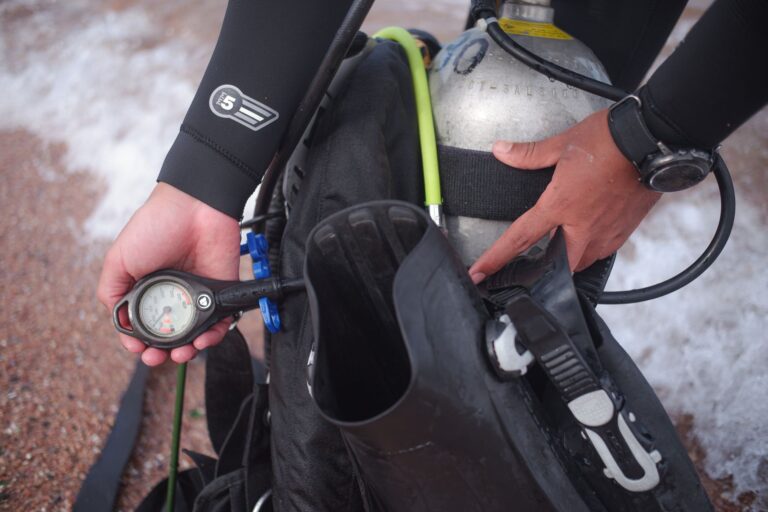
- Download the insurer’s app or save their emergency number. Store it in your phone, your dive log, and your emergency contacts. Don’t assume you’ll have mobile data to look it up.
- Print the policy card. Keep a physical copy in your dive bag, not just your wallet. If your bag is lost or your phone dies, you still have proof of coverage.
- Inform your dive buddy. Share your policy number and emergency contact info with your buddy. If something happens, they can call the insurer while you’re being treated.
- Check coverage for your specific destination. Some policies have region-specific limitations. Cover might be lower for certain remote islands. Confirm your destination is within the policy’s service area.
- Consider a waterproof document pouch. A waterproof document pouch for your policy card and a copy of your passport is a small investment that can save major headaches.
These steps take five minutes and can make a big difference if something goes wrong.
Frequently Asked Questions About Dive Travel Insurance
Will insurance cover me if I dive solo?
Most dive insurance policies assume you’re diving with a buddy as part of an organized dive. Diving solo, even if trained, often voids coverage. Check the section on “safe diving practices” in your policy. Many explicitly require buddy diving.
Does annual insurance cover liveaboards?
Yes, most annual plans like Dive Assure cover liveaboard trips. But verify that the plan includes coverage for gear theft from boats and trip interruption due to weather, which are more common on liveaboards.
Can I get insurance if I have a pre-existing condition?
It depends. Some insurers will cover you if the condition is stable and declared, and you may need medical clearance. Others will exclude it entirely. Always declare pre-existing conditions truthfullyâwithholding them is grounds for claim denial.
How long does it take to file a claim for decompression illness?
Claims for DCI are usually processed quickly because they’re urgent. Most specialist insurers have a rapid claims process for medical emergencies. For non-urgent claims like lost gear, it can take weeks. File as soon as you have the necessary paperwork (medical reports, receipts, dive logs).
What happens if I run out of air and need treatment?
This falls into what insurers call “gross negligence” or “dangerous activity.” Many policies exclude treatment for injuries resulting from running out of air, because it’s considered an avoidable mistake. This is a strong reason to never push your limits.
Final Recommendations: Which Plan Should You Buy?
Here’s my direct advice based on your diving style.
For most recreational divers taking one or two trips a year: Buy DAN TravelGuard. It’s the safest, most comprehensive option for dive-specific risks. You get the medical hotline, high DCI limits, and reliable support.
For frequent divers or liveaboard enthusiasts: Buy Dive Assure’s annual plan. It’s cost-effective for multiple trips and covers the specific risks of liveaboard diving.
For occasional travelers on general vacations who dive a few days: Buy World Nomads with the dive add-on. It’s affordable and easy to purchase.
For technical or rebreather divers: Buy DAN’s technical diving add-on or Insure4Diving for UK residents. Standard plans won’t cut it.
Whichever you choose, buy it before your next trip. Your safetyâand your bank accountâdepends on it.