Hearing Protection While Diving: What Divers Should Know
Introduction
Most divers think about equalization before they even enter the water. It gets drilled into you during open water training: clear early, clear often, never force it. But equalization is only one piece of the puzzle when it comes to your ears. Diving places unique, sometimes underestimated stress on your ears that goes far beyond the squeeze you feel on descent. Cold water, pressure changes, and prolonged moisture exposure can each contribute to long-term hearing issues that are cumulative and often preventable.
Hearing protection while diving covers earplugs designed for diving, proper hood selection, and post-dive care routines. A lot of divers don’t think about it until they have a problem. This article is meant to help you understand the risks, sort through the products, and make practical decisions that keep your ears healthy for the long haul. If you dive regularly, especially in cold water, this information matters more than you might think.
[IMAGE_1]
Why Diving Puts Your Ears at Risk
Your ears are not designed for the underwater environment. The human ear evolved for air, not water, and diving introduces three distinct threats that work together over time.
The most immediate risk is barotrauma. This happens when pressure changes inside and outside the eardrum are not equalized properly. The Eustachian tube, which connects your middle ear to the back of your throat, is responsible for equalizing that pressure. If it is swollen, congested, or you simply descend faster than you can clear, the eardrum can stretch, rupture, or cause fluid to accumulate behind it. Barotrauma is painful and often forces divers out of the water for weeks.
The second risk comes from cold water. Repeated exposure to cold water in the ear canal causes the body to grow new bone tissue, a condition called exostoses, commonly known as surfer’s ear. This is a slow, cumulative process. It is not something you feel after one dive. But over years of diving in water below 70°F (21°C), the ear canal gradually narrows, trapping water, wax, and debris. Eventually, this leads to recurrent infections, hearing loss, and often surgery to remove the bone growths.
The third risk is infection, specifically swimmer’s ear (otitis externa). This is inflammation and infection of the outer ear canal caused by trapped moisture. When water stays in your ear for hours after a dive, the warm, dark environment becomes a breeding ground for bacteria. Divers are especially susceptible because hoods and earplugs, while protective in other ways, can trap that moisture against the skin.
Understanding these risks matters because hearing damage from diving is not like a pulled muscle. It does not heal quickly. Prevention is vastly more effective than treatment.
The Difference Between Equalization and Hearing Protection
This is a point of confusion for many divers. Equalization and hearing protection are separate goals, and understanding the distinction is important for choosing the right approach.
Equalization solves a pressure problem. It balances the pressure in your middle ear so your eardrum can move freely. This is accomplished through techniques like the Valsalva maneuver, Toynbee maneuver, or Frenzel maneuver. It is about managing the squeeze during descent and ascent.
Hearing protection addresses temperature, moisture, and physical irritation. It does not equalize pressure. A hood keeps cold water from circulating through your ear canal, reducing the risk of caloric stimulation (vertigo caused by cold water in the ear) and helping prevent exostoses. Vented earplugs block direct water flow while allowing pressure to equalize through a small channel. Post-dive drops help dry the ear canal, preventing infection. Divers who dive in colder conditions may find a well-sealing diving hood to be a simple and effective first step.
Divers sometimes assume that if they can equalize fine, they do not need hearing protection. That is not the case. You can equalize perfectly and still develop surfer’s ear or swimmer’s ear over time. The reverse is also true: wearing hearing protection does not help you equalize. These are complementary strategies, not substitutes.
Can You Wear Earplugs While Diving?
This is one of the most common questions divers ask, and the answer requires some nuance. Yes, you can wear earplugs while diving, but not the kind you use for sleeping or shooting ranges. Standard foam earplugs are dangerous underwater. They create an air pocket in the ear canal that cannot equalize with ambient pressure. As you descend, the air pocket shrinks, pulling the eardrum outward. On ascent, the air pocket expands, pushing the eardrum inward. This is called a reverse block, and it can be extremely painful and damaging.
For diving, you need vented earplugs. These are specially designed to allow pressure equalization through a small tube or channel while still blocking water from entering the ear canal. The most common off-the-shelf option is Doc’s Pro Plugs, made of flexible silicone with a hollow vent tube running through them. Another option is EarSeal, which you mold to your ear shape at home. Both are designed to prevent surfer’s ear and swimmer’s ear without interfering with equalization. For those new to this gear, vented earplugs designed for diving are worth exploring.
There are pros and cons. Vented earplugs work well in cold water, for divers prone to ear infections, and for anyone diving in dirty or contaminated water. They do not fully block sound the way foam plugs do, but they do muffle it somewhat. Some divers find that disorienting at first, especially when trying to hear a dive buddy or a boat engine. You get used to it over a few dives.
For most warm water divers with healthy ears, the best approach is often to wear nothing in your ears and rely on a well-fitting hood to keep water out. But if you have a history of ear infections, dive in water below 70°F, or are a professional diver who spends hours underwater daily, vented earplugs are worth considering. If you have pre-existing ear issues or a perforated eardrum, talk to a dive doctor before using any earplug.
Diving Hoods: Your First Line of Defense
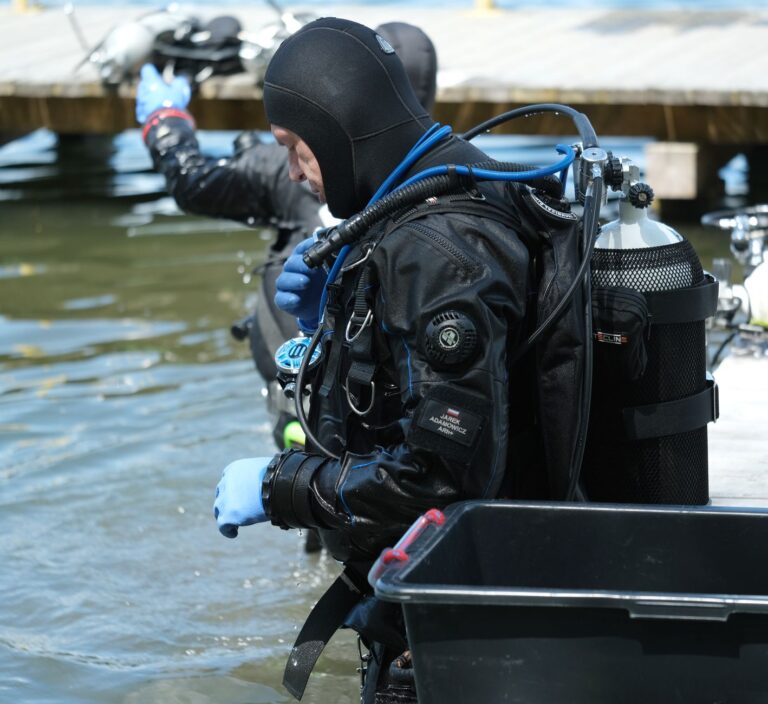
Before you worry about earplugs, check your hood. A properly fitting hood is the simplest and most effective hearing protection you can get for cold water diving. It works by preventing cold water from flushing through your ear canal. That alone reduces the risk of both surfer’s ear and caloric vertigo significantly.
Hood thickness varies from 3mm to 7mm. For water above 70°F, a 3mm hood is usually enough to keep water out of your ears, even if you do not need it for thermal protection. For colder water, 5mm or 7mm provides better insulation but can be tighter around the head and ears. The key is fit. The hood needs to seal around your ears without being too tight over them. If the hood compresses your ear canal, it can make equalization harder and cause discomfort. Look for a hood with a smooth interior lining that does not bunch up around the ears.
Material matters. Most hoods are neoprene. Some are lined with nylon or have a silicone seal around the face. Neoprene is warm and flexible but can trap moisture against the skin. Rinsing your hood after every dive and letting it dry fully between days helps prevent infections.
If you are prone to ear infections, consider wearing a hood even in warm water. Many divers skip the hood when they do not need thermal protection, but the thin layer of neoprene still blocks water circulation and keeps your ears drier. It is a cheap and effective prevention tool.
Vented Earplugs: A Closer Look
If you decide to try vented earplugs, it helps to understand your options and how to use them properly. Doc’s Pro Plugs are the most common entry point. They come in several sizes, are made of soft medical-grade silicone, and have a small hollow tube running through the center. This tube is what allows pressure equalization. You insert them before descending, and water enters the tube but does not fully enter the ear canal. Air and pressure pass through freely.
Another option is EarSeal, a custom-moldable silicone kit. You mix the two parts, press the material into your ear, and let it cure into a plug that fits your exact ear shape. The advantage is a more comfortable, secure fit. The downside is cost and the fact that you cannot adjust the size later. These also have a vent channel, similar to Doc’s Pro Plugs.
Regardless of which you choose, maintenance matters. Clean them after every dive with fresh water and let them dry completely. Salt, sand, and bacteria build up quickly. Replace them when the silicone hardens or cracks, usually every few months with regular use.
Using vented earplugs with a hood works well, but you need to be deliberate about it. Some hoods have molded ear pockets or holes specifically designed to accommodate earplugs. If your hood does not, you can still wear plugs underneath, but you may need to adjust the hood so it does not push the plug in too deep. A little fiddling before the first dive of the trip usually solves the issue.
One real-world consideration: vented earplugs feel strange the first few times you use them. The slight muffling of sound and the sensation of water in the vent tube can be distracting. Most divers adapt within two or three dives. If you are still uncomfortable after your first few dives, you may need a different size or style.
[IMAGE_2]
Post-Dive Ear Care: Preventing Swimmer’s Ear
Even with a hood and earplugs, some moisture will find its way into your ears. The risk of infection depends largely on what happens after the dive. Drying your ears properly in the hours after diving is the most effective way to prevent otitis externa.
The simplest method is to tilt your head to the side and let gravity drain the water. You can also gently tug your earlobe to straighten the ear canal. For divers who are prone to infections, an ear drying solution is worth carrying in your dive bag. The classic recipe is a 50/50 mix of rubbing alcohol and white vinegar. The alcohol helps evaporate the water, and the vinegar restores the natural acidic pH of the ear canal that inhibits bacterial growth. Commercial drops like Ear-Dry or Swim-Ear work the same way. Divers who want a ready-made option can consider ear drying drops designed for swimmers and divers.
Here is the technique: after diving and rinsing your ears with fresh water, tilt your head and apply a few drops into the ear canal. Keep your head tilted for about a minute. Then tilt the other way and let the solution drain out. Do not stick anything into your ear canal, including cotton swabs. Q-tips push wax and debris deeper and increase infection risk.
There is one important warning. Do not use ear drops if you have a perforated eardrum or ear tubes. The liquid can enter the middle ear and cause serious problems. If you are unsure whether your eardrum is intact, do not take the risk. See a doctor instead.
Surfer’s Ear and Divers: What You Need to Know
Surfer’s ear sounds like a problem for surfers, but divers are just as vulnerable, if not more so. The medical term is exostoses, and it refers to bony growths that form in the ear canal in response to repeated cold water exposure. The body essentially tries to protect the eardrum by building a thicker wall in the ear canal, which narrows the passage over time.
The process is slow. It does not happen after a few cold dives. But if you dive regularly in water below 70°F over several years, the narrowing can become significant. In the early stages, you might not notice anything. As the canal narrows, you may find it harder to clear water from your ears after diving, and ear wax may build up more easily. In advanced cases, the canal can become almost completely blocked, causing hearing loss, recurrent infections, and difficulty equalizing. The treatment is surgery to remove the bone growths, which requires recovery time and carries some risk of hearing damage.
Prevention is straightforward. Wear a hood in cold water. Add vented earplugs if you dive frequently or if the water is particularly cold. The combination blocks the direct cold water flow that triggers the bone growth. If you are just starting to dive in cold water, get in the habit now. It is much easier to prevent surfer’s ear than to treat it.
Hearing Protection for Freediving and Spearfishing
Freedivers and spearfishers face their own set of ear challenges. The rapid descent and ascent profiles, combined with surface intervals spent in cold water, increase both the risk of barotrauma and the long-term effects of cold water exposure. Freedivers also tend to hold their breath during ascent, which can compound equalization problems if they do not clear properly.
For this group, the same principles apply. Vented earplugs are worth considering if you dive frequently in cold water or have a history of ear infections. The tradeoff is that some freedivers prefer to dive without earplugs to maintain full situational awareness. They want to hear approaching boats, fish sounds, or their dive buddy splashing on the surface. That is a real concern, especially in spearfishing where safety is paramount.
The balanced view is this: if you dive shallow and infrequently, the situational awareness benefit may outweigh the ear protection need. If you dive deep, dive often, or dive in cold water, the risk of ear damage is higher, and earplugs are worth trying. You can always revert to no plugs if you find they interfere too much with your safety awareness. The key is to make an intentional decision based on your specific diving habits.
Common Mistakes Divers Make With Ear Protection
Over the years, I have seen divers make the same mistakes repeatedly. Recognizing them can save you trouble.
Using standard foam earplugs underwater. This is the most dangerous mistake. Foam plugs create an air pocket that cannot equalize. The result is a reverse block that can rupture the eardrum or cause intense pain on ascent. Only use vented earplugs designed for diving.
Putting earplugs in too deep or too tight. The goal is a seal at the entrance of the ear canal, not deep inside. If you push a vented plug in too far, it can cause irritation and make equalization harder. The plug should sit comfortably in the outer canal.
Ignoring ear pain and hoping it goes away. Pain during a dive is a signal that something is wrong. It could be a pressure imbalance, a developing infection, or a mechanical issue. If your ears hurt, end the dive. Pushing through pain can turn a minor issue into a serious one.
Skipping ear care on multi-day dive trips. One dive is usually fine. Three dives a day for a week, however, creates a lot of moisture exposure. Even if you do not have symptoms early in the trip, infections can build up over successive days. Rinse your ears and use drying drops each day. It takes two minutes.
Sharing earplugs. Earplugs carry bacteria and wax. Using someone else’s introduces foreign bacteria into your ear canal, which is a quick route to infection. Keep your own set and never borrow or lend them.
When to See a Doctor About Your Ears
Not every ear issue requires a doctor. Minor discomfort that resolves after you surface and equalize normally is usually not a concern. But there are clear signs that you need professional evaluation before your next dive.
See a doctor if you have pain that persists after surfacing, especially if it lasts more than a few hours. This can indicate barotrauma, infection, or eardrum damage. Hearing loss, even if temporary, is another red flag. If you surface and notice that your hearing is muffled in one ear, or if you have a feeling of fullness that persists, get checked. Discharge from the ear, whether clear fluid, blood, or pus, requires immediate attention. Tinnitus (ringing in the ear) that does not go away within an hour is also a sign of potential damage.
The most important rule is this: do not dive if you suspect a blocked ear or a perforated eardrum. Diving with a compromised eardrum can lead to permanent hearing loss. If you have recurring ear issues, consider seeing a dive medicine specialist or an ENT who understands the unique pressures divers face. They can check for underlying conditions like narrow Eustachian tubes or chronic sinus issues that make you more vulnerable to ear problems.
[IMAGE_3]
Final Recommendations for Healthy Ears Underwater
Here is the bottom line. Every diver should own at least one hood that fits well and covers the ears securely. If you dive in water below 70°F on a regular basis, or if you are prone to ear infections, add a pair of vented earplugs to your gear bag. Use ear drying drops after every dive on multi-day trips. And if something feels wrong in your ears, stop diving and see a doctor before your next trip.
Hearing protection while diving is not an afterthought. It is a long-term investment in your ability to keep diving. The gear is simple, the habits are easy to build, and the consequences of ignoring them are permanent. Take a minute to assess your own diving habits and choose the protection that matches your conditions. Your ears will thank you years from now when you are still diving comfortably while others are dealing with infections and hearing loss.