Diving With Panic Attacks: Risk Management and Medical Guidance
Introduction
If you are a diver who experiences panic attacks, you are not alone, and it does not automatically mean you can’t dive. Diving with panic attacks is a serious safety consideration, but it is a manageable one with the right medical guidance, planning, and self-awareness. This article is for divers who have been diagnosed with panic disorder, those who have occasional anxiety attacks, and anyone who has felt that wave of dread hit underwater. The goal is not to convince you to dive if it is unsafe, but to give you a practical, medically-backed framework for making that decision. We’ll cover everything from pre-dive screening with a physician to what to do if an attack happens at 20 meters. This isn’t theory. It is about keeping you alive and comfortable in the water.
[IMAGE_1]
Understanding Panic Attacks in the Diving Environment
A panic attack is a sudden episode of intense fear that triggers severe physical reactions when there is no real danger. In the diving environment, those triggers are amplified. The pressure of the water, the enclosed feeling of a mask and regulator, limited visibility, and the sheer fact that you are submerged can all create a perfect storm for someone prone to anxiety. There is a difference between normal nervousness before a diveâwhich almost everyone feelsâand a clinical panic disorder. Normal nervousness fades as you begin the descent. A panic attack builds, often with a sense of impending doom, and can lead to hyperventilation, a racing heart, and an overwhelming urge to surface.
Physiologically, a panic attack underwater is dangerous because it can lead to breath-holding or a rapid ascent, both of which increase the risk of decompression sickness and arterial gas embolism. Psychologically, it can shatter your confidence. Understanding that the environment itself can act as a trigger is the first step in managing it. The confined space of a dry suit or a tight wetsuit, the feeling of being trapped at depth, and even the sound of your own breathing can all provoke an attack. Recognizing these triggers allows you to plan around them.
Pre-Dive Medical Screening and Doctor Consultation
Before you think about booking a dive, you need a consultation with a dive physician. This is non-negotiable. A doctor who understands diving medicine will evaluate your specific history of panic attacks and determine if diving is safe for you. The evaluation will include a discussion of your triggers, the frequency and severity of your attacks, and any medications you are taking. Many divers assume that if they are on an SSRI for anxiety, they cannot dive. That is not always the case. SSRIs are generally considered safe for diving once you have been stable on them for several months. Benzodiazepines, however, are a different story. They cause drowsiness, impair judgment, and can be dangerous underwater. A dive physician will help you weigh the risks and may recommend a trial period in a pool before open water.
When you visit your doctor, bring a list of your medications, a detailed description of your panic attacks (what triggers them, how long they last, what you feel), and a copy of your dive medical questionnaire. Be honest. Hiding a panic disorder to get cleared for a dive trip is one of the most dangerous things you can do. The doctor may also recommend a stress test or a psychological evaluation to ensure you are fit for the environment. If you are given the green light, get it in writing. Some dive operators will require this documentation.
Practical Risk Management Strategies Before the Dive
Once you have medical clearance, the real work begins. Risk management for panic attacks starts long before you hit the water. The first and most important step is buddy communication. You need a hand signal specifically for ‘I am panicking’ or ‘I need to ascend now.’ This is not the standard ‘Okay’ signal or the ‘problem’ signal. Establish a clear, unambiguous signal during your pre-dive briefing. Your buddy needs to know that if you give this signal, the dive ends immediately, no questions asked.
Next, choose your dive sites carefully. Avoid strong currents, cold water, and low visibility on your first few dives. Opt for calm, shallow sites with easy exits. A sandy bottom in 10 meters of clear, warm water is a much better environment for an anxious diver than a drift dive in 30 meters of green water. Monitor the weather. Rough seas and poor surface conditions can spike anxiety before you even descend. If you are not feeling right, call the dive. There is no shame in that. A useful piece of gear for anxious divers is a dive computer with audible alarms. Knowing you have an automated backup to monitor your depth and no-decompression limits can provide psychological reassurance. Look for models that allow you to set conservative limits. Divers who value this reassurance may want to explore dive computers with conservative settings.
[IMAGE_2]
Managing a Panic Attack Underwater: Step-by-Step Protocol
Despite all your planning, a panic attack can still occur underwater. Knowing exactly what to do can prevent a bad situation from becoming a fatal one. The protocol is straightforward and needs practice. Step one is to stop all movement. Finning frantically only worsens your breathing and increases your heart rate. Hover or kneel on the bottom if you can. Step two is to focus on your breathing. Take the regulator out of your mouth? No. Keep it in. Take a long, slow exhale through your regulator. This is the most critical action you can take. A slow, controlled exhale triggers your parasympathetic nervous system and helps lower your heart rate. Inhale slowly through your mouth, then exhale slowly. Repeat this for at least 30 seconds. Do not hold your breath. Ever. Step three is to signal your buddy using your pre-agreed panic signal. Point to yourself, then give the ascend signal. Do not wait for a discussion. Your buddy should understand that the dive is over.
Begin your ascent immediately, but slowly. If you are deep, aim for a controlled ascent rate of no more than 9 meters per minute. If you can manage a safety stop, do it, but your own safety is the priority. Bolting to the surface is the most common fatal mistake divers make during a panic attack. The risk of an arterial gas embolism is real and can be fatal. If you feel the urge to shoot up, fight it. Use your buoyancy control to keep your ascent slow. If you cannot, let your buddy control your buoyancy. After surfacing, establish buoyancy immediately, inflate your BCD, and signal that you are okay. Once on the boat or shore, debrief with your buddy. Do not brush it off. A panic attack is not a failureâit is information.
Breathing Equipment and Regulator Selection for Anxious Divers
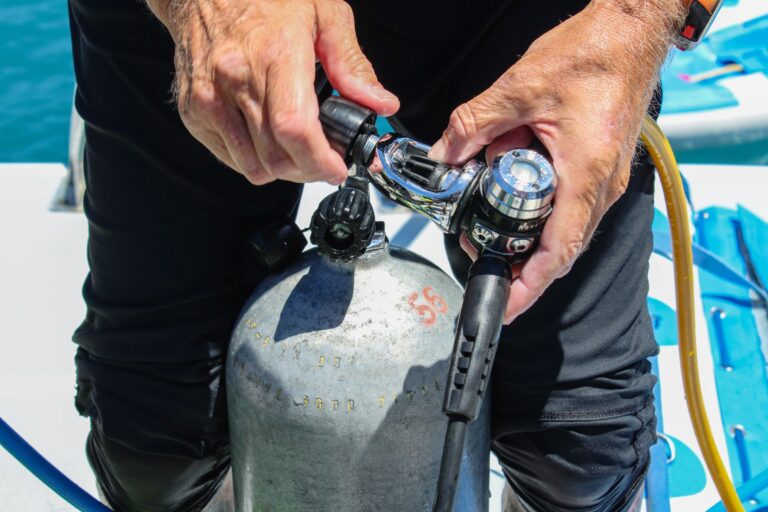
The gear you use can make a significant difference in your comfort level. For anxious divers, the type of regulator you choose matters. A balanced regulator delivers consistent airflow regardless of depth or tank pressure, which makes breathing easier and more predictable. This can reduce the sensation of air starvation during a stressful moment. An unbalanced regulator can become harder to breathe from at depth or low tank pressure, which can mimic the feeling of a panic attack. If you are prone to anxiety, invest in a balanced regulator. Look for one with a low inhalation effort rating. Consider browsing balanced scuba regulators for easier breathing.
Mask selection is equally important. A low-volume mask reduces the feeling of being enclosed and allows for easier equalization. Some anxious divers find that a full-face mask reduces claustrophobia because it allows for nasal breathing and eliminates the pressure of a mouthpiece. However, full-face masks are a significant expense and require training. A simpler solution is a snorkel keeper system that secures your snorkel to your mask strap, removing one more point of failure from your mental checklist. For the regulator itself, consider a softer mouthpiece. Hard, oversized mouthpieces can cause jaw fatigue and contribute to a sense of discomfort. A good mouthpiece that fits your bite can feel almost invisible, which is exactly what you want when your mind is on the edge. Divers looking for comfort may check out softer scuba mouthpieces.
Buddy Pairing and Dive Planning for Divers Prone to Panic
Choosing the right buddy is just as important as choosing the right regulator. An experienced, calm buddy who knows about your condition is invaluable. Ideally, this is a dive professional or a very experienced recreational diver who has dealt with nervous divers before. A new diver or an impatient buddy can add to your stress. During your pre-dive briefing, be explicit: ‘I have a panic disorder. If I give this signal, we ascend immediately. No questions, no delay.’ This is not a negotiation. A good buddy will respect that.
Your dive plan itself should be conservative. Limit your bottom times and depths. A good rule of thumb for anxious divers is to stay above 15 meters. This allows you more bottom time, reduces narcosis risk, and makes a controlled ascent simpler. Always plan dives with an easy exit. A beach entry where you can simply stand up and walk out is ideal for building confidence. Avoid overhead environments like caves, wrecks, or tight swim-throughs. These can trigger claustrophobia even in experienced divers. Diving alone is never a good idea, but for someone prone to panic, it is outright reckless. Never dive without a buddy who knows your situation.
Medication Considerations: What Works and What Doesn’t
This section requires careful attention because medication can be a lifeline, but it can also be a liability underwater. The most common medications for panic attacks fall into three categories: benzodiazepines, SSRIs, and beta-blockers. Benzodiazepines like Xanax, Valium, and Ativan are effective for acute panic attacks, but they are generally not recommended for diving. They cause sedation, drowsiness, and impaired cognitive function. Under pressure, these effects can be amplified. A diver who takes a benzodiazepine before a dive may not have the mental clarity to react to an emergency. More importantly, the combination of nitrogen narcosis and benzodiazepine sedation is poorly studied and potentially dangerous. The general recommendation is to avoid diving if you require benzodiazepines for anxiety control.
SSRIs like Zoloft, Prozac, and Lexapro are a different story. They are not sedating and do not impair cognitive function in the same way. Many dive physicians consider SSRIs safe for diving provided the diver has been stable on the same dose for at least three months and has no side effects like dizziness or drowsiness. The key word is stable. If you are still adjusting to a new dose, wait. Beta-blockers like propranolol are sometimes used off-label for performance anxiety. They slow the heart rate and can reduce the physical symptoms of a panic attack. However, they can also mask symptoms of hypoxia or decompression sickness. If you are on any of these medications, the only safe course is to see a dive physician. Do not take medical advice from a dive shop or an online forum.
Breathing Techniques and Mental Anchors During Descent and Ascent
Your breath is your most powerful tool against a panic attack. Before you even enter the water, practice box breathing: inhale for four seconds, hold for four, exhale for four, hold for four. Do this for two minutes while kitted up. It lowers your baseline heart rate and prepares your nervous system. Once you are underwater, switch to diaphragmatic breathing. Inhale slowly through your mouth, focus on expanding your belly rather than your chest, and then exhale slowly through your regulator. A long exhale is the key point. It forces your body to slow down. Do not breathe in short, shallow burstsâthat mimics hyperventilation.
Mental anchors can also be effective. Choose a simple, calming word or phrase to repeat in your head during descent and ascent. For example, ‘calm’ on the inhale and ‘safe’ on the exhale. This occupies your mind and breaks the loop of panic thoughts. Some divers use a checklist of their equipment: mask, regulator, BCD, fins. Running through the checklist mentally during a stressful moment gives your brain a structured task instead of letting it spiral. Experiment with these techniques during confined water sessions or pool dives first. If they work there, they will work in open water.
[IMAGE_3]
Post-Dive Debrief and Long-Term Management
After every dive, whether you had a panic attack or not, take five minutes to debrief with yourself. Write down a few notes in your dive log: how you felt before the dive, any anxiety triggers you noticed, how your breathing was, and any moments of stress. Over time, this log becomes a powerful tool for identifying patterns. If every dive in cold water triggers anxiety, you know to avoid it. If shallow dives are fine but deeper ones are not, adjust your limits. This is not about avoiding divingâit is about diving smarter.
If you had a panic attack during the dive, talk to someone. A therapist who understands anxiety disorders can help you develop coping strategies. Many divers benefit from gradual exposure therapy, starting with shallow, controlled pool sessions and slowly progressing to open water. Never skip this step and jump straight into deep or challenging dives because you feel overconfident after one good dive. Recovery is not linear. Some days will be worse than others. The goal is long-term confidence, not a single successful dive.
When to Call a Dive: Recognizing Your Limits
There will be days when you should not dive. Recognizing this is a sign of maturity, not weakness. If you had a panic attack the night before, if you slept poorly, if you are feeling generally anxious or on edge, it is better to sit out. A high baseline anxiety level before a dive almost guarantees a bad experience underwater. Trust your gut. If you feel off, stay on the boat or the shore. Do not let social pressure or the cost of the dive persuade you to take a risk. Your life is worth more than a single tank of air.
When you communicate with a dive operator about your medical condition, do so respectfully and clearly. Most professional dive centers are used to dealing with nervous divers. Some may request a doctor’s note. That is fine. If an operator dismisses your concerns or pressures you to dive when you are unsure, walk away. There are plenty of other operators who prioritize safety over a paying customer. Knowing when to call a dive is the most important skill for any diver, but especially for one who dives with panic attacks.
Final Recommendations and Booking Your Fitness-to-Dive Assessment
The decision to dive with panic attacks comes down to three things: honest medical clearance, conservative planning, and a toolbox of practical techniques. If you are reading this and considering your first dive after a diagnosis, start with a fitness-to-dive assessment. This is a specialized medical examination conducted by a physician trained in dive medicine. They will review your history, test your fitness, and give you a clear answer. Do not skip this step. It is the foundation of everything else.
After your assessment, book your dive with a center that understands your needs. Choose calm, shallow sites, brief your buddy thoroughly, and practice your breathing techniques. You can dive safely with panic attacks, but it requires a different approach than the average diver. It requires honesty, preparation, and a willingness to sit out when necessary. If you are ready to take that step, book a fitness-to-dive assessment at 1st Contact Travel Clinic. Their physicians specialize in dive medicine and can give you the clearance and confidence you need to get back in the water safely.